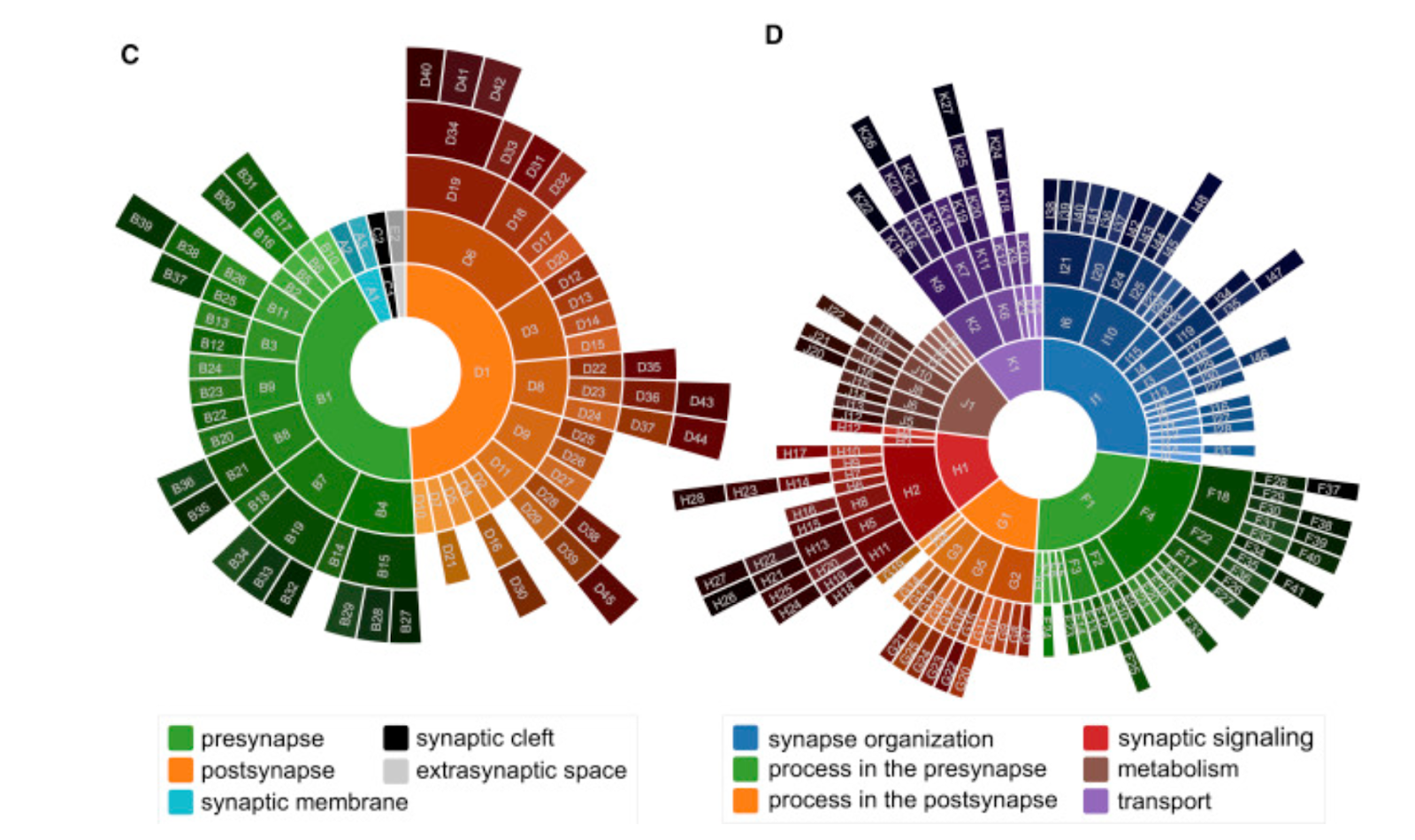
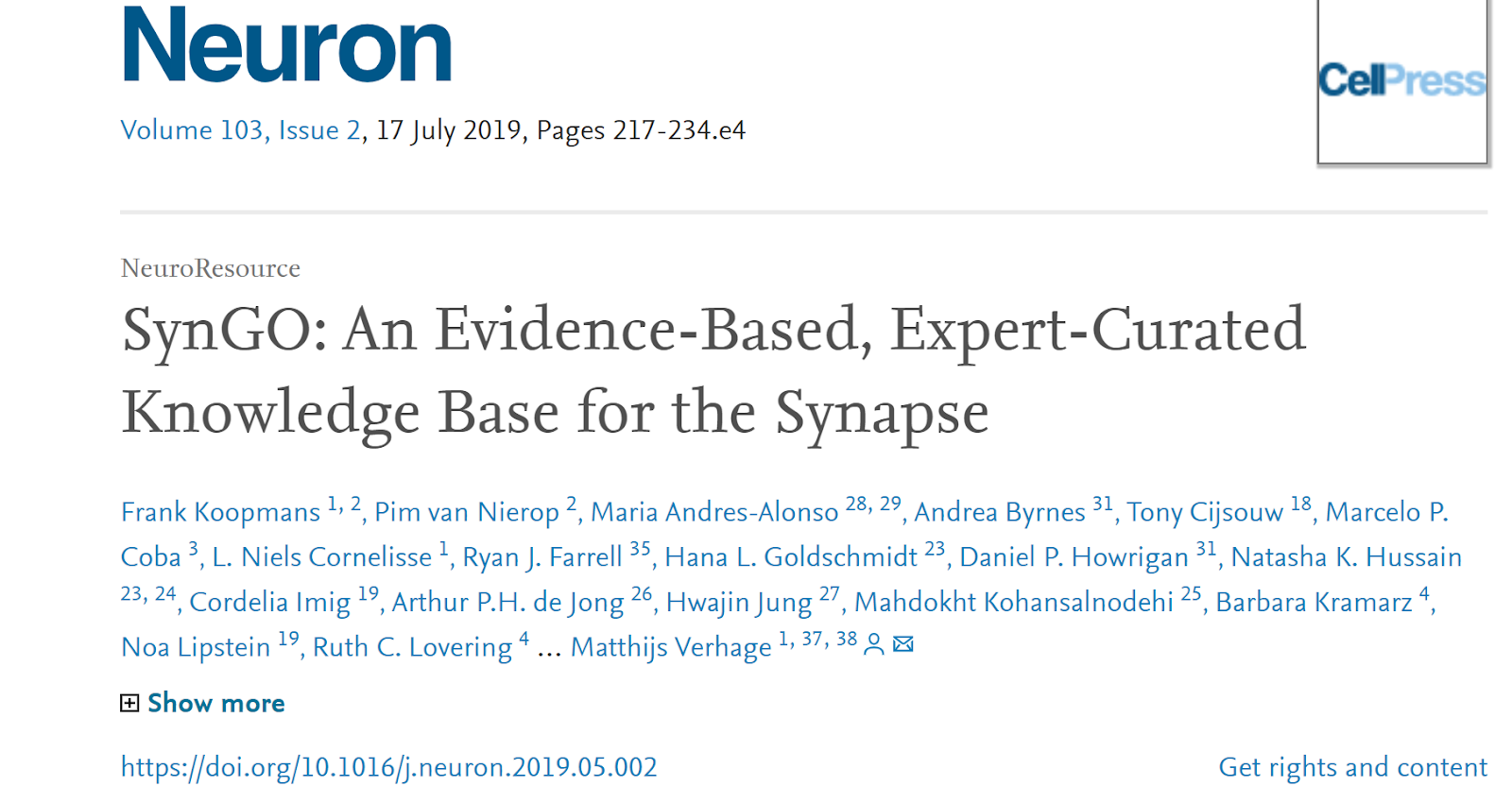
SynGO — A beautiful resource for neurons and synapses and stuff!

There are resources and databases for so many things popping up that it’s impossible to keep track. This new one SYNGO is something I would have found really helpful while constructing a manuscript last year (I looked everywhere for something like this!) But it’s in perfect time to help a new collaborator at UVA.

Studying synapses? This compiles data from the best studies and makes it push button level simple. You can even parse your data to only compare your results against the results that are not proteomics (in case accuracy isn’t your primary focus in studying tiny bits of the ends of brain cells).

You can read about Syngo here!

Transcript Abundance IS NOT THE SAME as protein abundance!

It’s 2019….and I’m shocked that this even needs to be said to anyone, but it does. I know it doesn’t have to be said to the brilliant people who, for some reason, come to this blog to read my rambling about proteomics, but — hey — maybe my annoyed rambling here will actually be useful to someone!

Here we go:

Transcript abundance does not correlate with protein abundance.

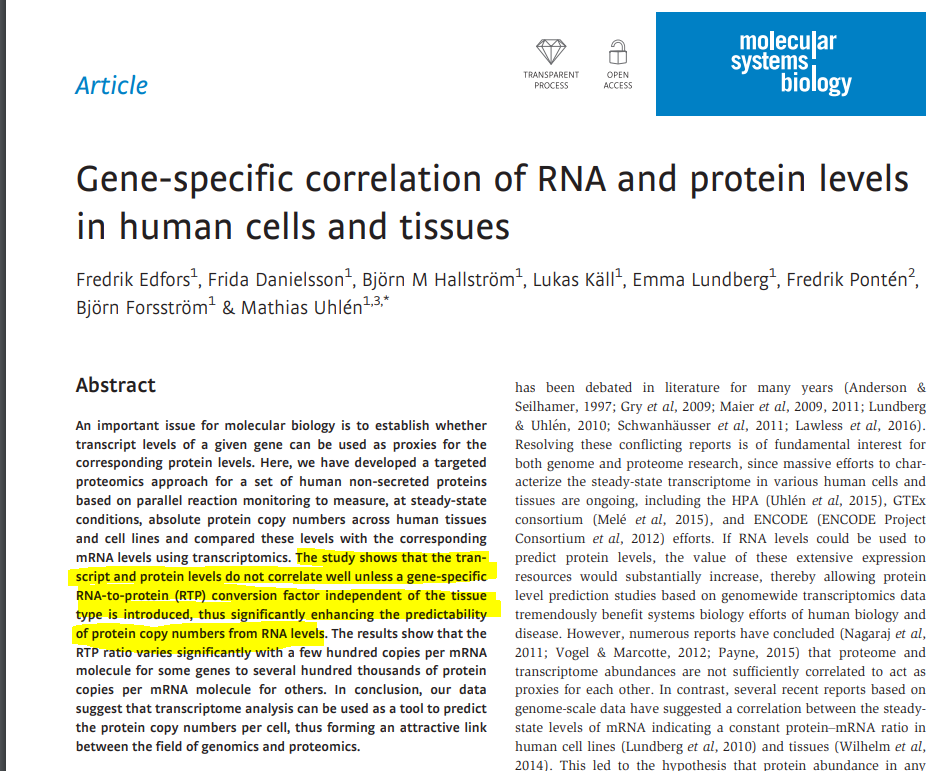
I’m going to throw in proof that I filtered on one criteria — “does it say it in the title or abstract?” because the people you’re going to need to say this to probably aren’t reeeaaaal into reading. Heck, I’ll even highlight it.

#1 It can, if you go on a gene by gene basis (and organism by organism) and throw in adjustment factors.

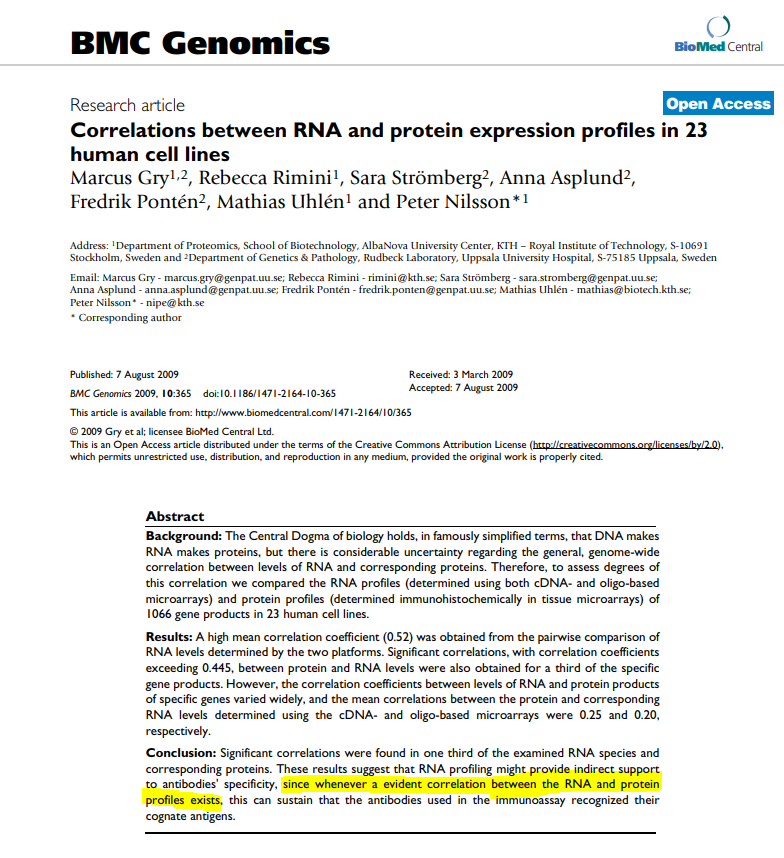
#2 — Maybe this is a new finding?  HINT: IT ISN’T!!!

In 2009, these authors suggest that you basically keep a list (it’s going to be small) of the proteins where RNA abundance and protein abundance correlate. THEN you can trust the mRNA levels to be helpful for predicting protein abundance.

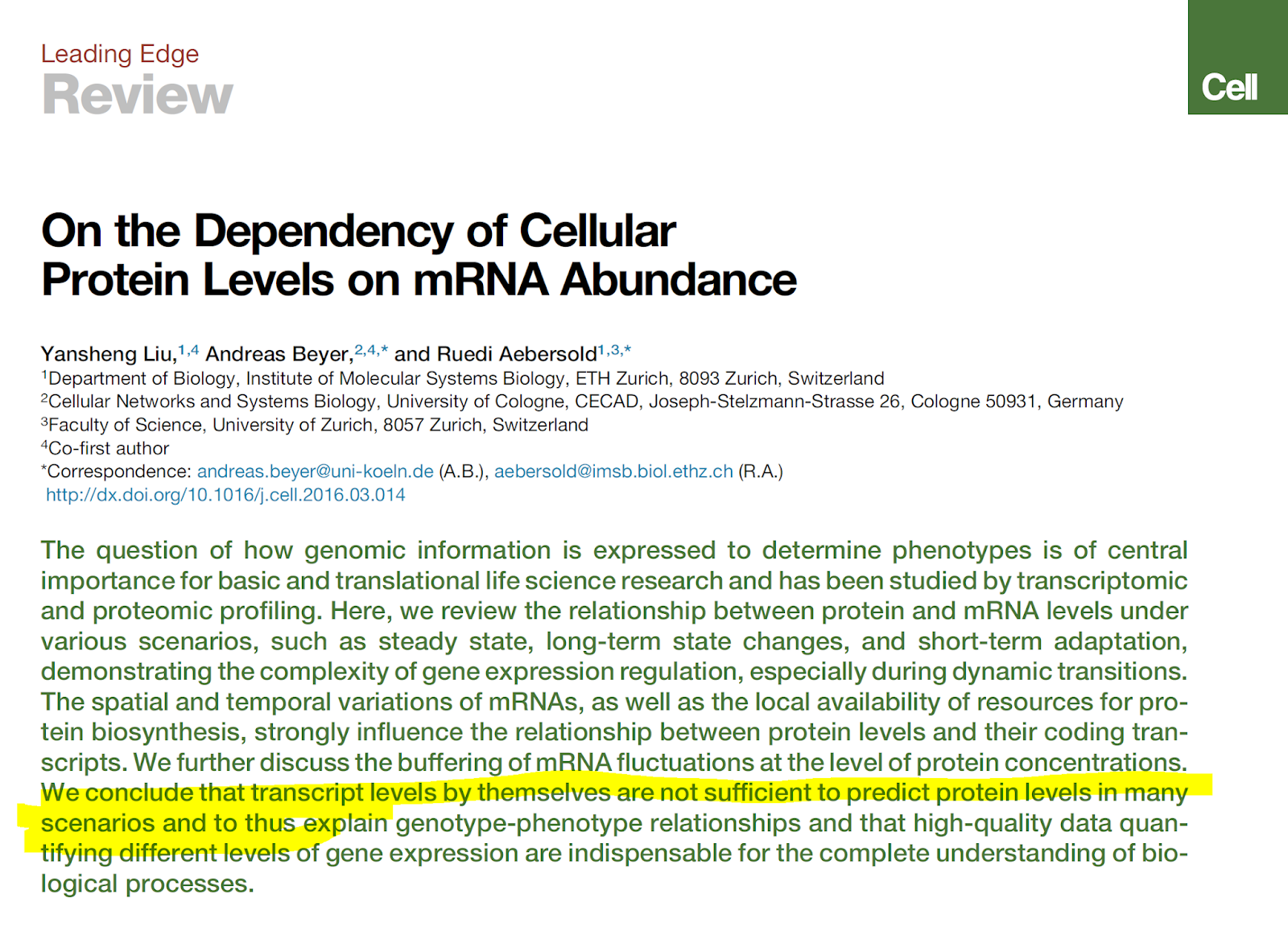
#3) Who’s heard of these journals? Let’s look at a really thoughtful review in something called Call? Sell?

I’m not even trying, yo. For real. I did a SILAC experiment (the gold standard for protein quantification) and RNA Microarrays on the same samples way way way back in the day. 1% overlap. Yes — on an Orbitrap XL with SCX fractionation, I didn’t get close to complete proteome coverage. I was PUMPED by a few thousand with quan. And microarrays died out for a very good reason (or should have, if they haven’t).

1% overlap in quan. Yeah…my system was messed up…but, come one. You’d think by chance it would be better.

Great quality Youtube video — XlinkX driven XL-MS studies

The XlinkX nodes that can be demo’ed/purchased and ran in Proteome Discoverer 2.3/2.3 (I need to look to see if I have them in 2.4…which I don’t have on the PC I’m typing this on) can seem to be a bit of a black box. It’s even more apparent when you’re troubleshooting or trying to do something a little different than following XlinkX example set verbatim.

If that video box above was added correctly, you should be able to watch a really nice video by Dr. Richard Scheltema walk you through the entire workflow as well as how XlinkX works.

(There is still stand-alone XlinkX, btw, and I think it’s still free.)

If the video link above didn’t work, it can be watched directly on YouTube here.

Great tutorials on FDR and Parsimony!

It is completely possible to prep a sample, run an instrument and process your data without ever knowing at all how any of it works. And that’s fantastic — until something goes wrong.

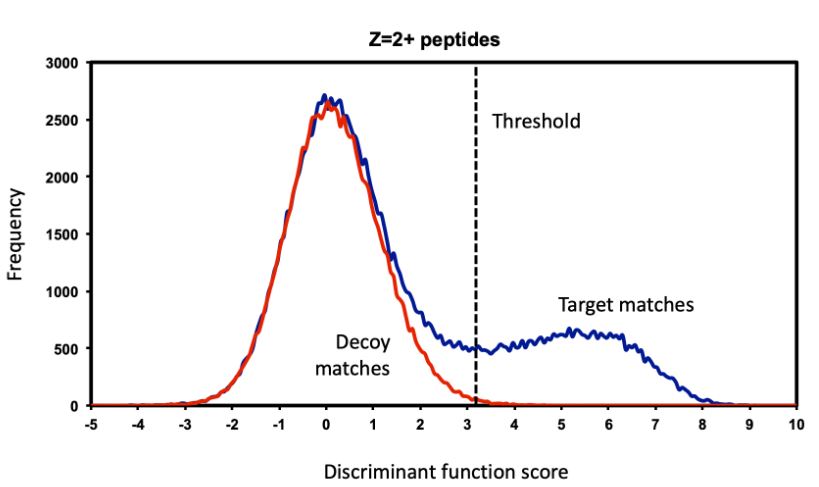
On the data processing side so many things are just assumed based on 15 or 20 years? of work developing this stuff. If you’d like an exceptionally clear walkthrough on two of the harder principles — false discovery rate estimation (FDR) and how parsimony (what to do with peptide identifications that are not mappable directly to a single ID — here are two great ones courtesy of Dr. Phil Wilmarth.

#1 — Shotgun proteomics and FDR

#2 — Parsimony (and maybe a better idea than parsimony?)

There are other great things at the GitHub as well. 100% recommended and added to the “Resources for NewBies section over there. —>

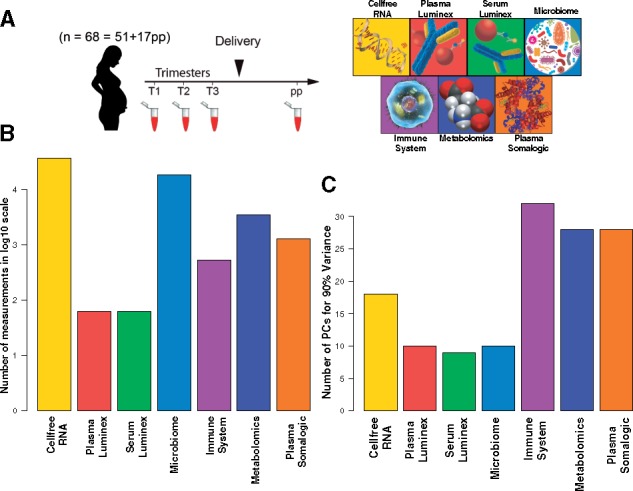
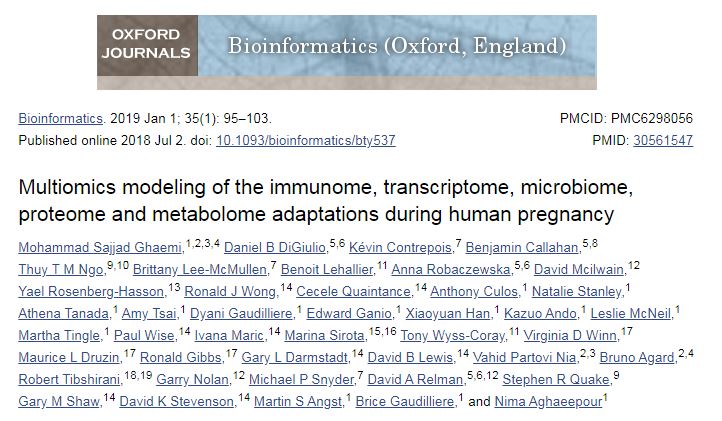
Proteome + Metabolome + Immunome + Microbiome + Transcriptome Integration = Pregnancy Multiomics!

.this new manuscript might have the answers to a lot of the questions I think we’ve all been hearing, primarily….

“HOW DO YOU INTEGRATE ALL THIS “-OMICS” DATA!!?!?!”

I’m going with “might have the answers” because there are a lot of assumptions made by the authors regarding the math background of the reader.

When you get to the methods section you get this brief “how we did the proteomics, metabolomics, cyTOF, etc., etc., is all in the Supplemental” and this is the first description of the integration of the data…

….right on….

So…all the stuff I’m interested in is in the Supplemental.

The plasma proteomics is done by SomaScan. This is a bead-based array technology that is coming up fast. This one can quantify around 300 proteins per sample. I think we’re going to see it continue to put pressure on LCMS proteomics for a couple of reasons.

1) Biologists are still doing microarrays (for real, they still are) and GWAS. They’ve got all sorts of ways to deal with data that isn’t the most precise thing in the world.
2) Oh — and we still have this reproducibility issue because none of us can agree on a single sample prep method for anything at all, ever.

 I really really hope to see a head to head soon to see what the precision/accuracy of this technique is versus someone who is good at proteomics. If anyone sees this, please let me know!

Even at 300 proteins this is still a ton of data across 50+ patient samples and I’m cool with this.

The microbiome stuff was done by a PCR amplification of the 16sRNA and the metabolomics was QE/QE Plus with one running HILIC and the other reversed phase.

The immunomics might be the highlight of the study!

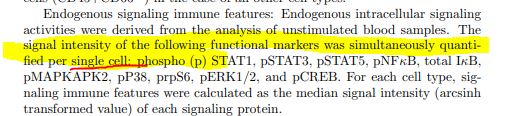
Whole blood from each patient was aliquoted out and either not stimulted or stimulated with LPS or IL-2, and so on — and then cyTOF time! For real, I’ve wondered what the heck you would do with these things (and so have other people, apparently, considering the number I’ve seen sitting around doing nothing after they’ve been purchased). If you aren’t familiar, you essentially put a metal tag on an antibody and then the antibodies bind to the cells and you vaporize everything — I think its inductively coupled plasma, but don’t quote me — then you use the lowest resolution mass spectrometer ever constructed (this home made one made with a spoon might be lower resolution, to be honest). You don’t care, though, because metals differ a lot by mass. (It does limit the total number of antibodies you can use, but it’s still a super cool concept.)

They get a signal, simultaneously, for every cell that comes through their cell sorter thing and gets vaporized, that can provide a concentration of ALL OF THOSE TARGETS! Pretty great, right?

If you’d like to look at the data yourself, it has all been converted to csv and integrated into R. All the scripts are available in a zip file at the very bottom of this page (it says the word “here” in a slightly different color).

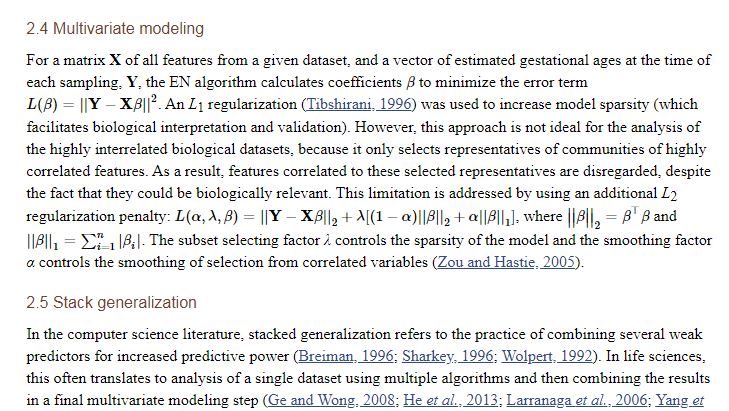
Did I learn how to integrate multiomics data? Hmmm…..I’ve got a bunch of math to brush up on that might get me closer than I was before — and — well…I could just use all their scripts and put in my data….so…maybe!
MotifeR — Better than just funny letters that are the wrong size!

I don’t know about you but I’ve been very disappointed every time I’ve used any kind of a protein motif software tool….awesome…now…I’ve got a bunch of letters that are funny sizes and colors.

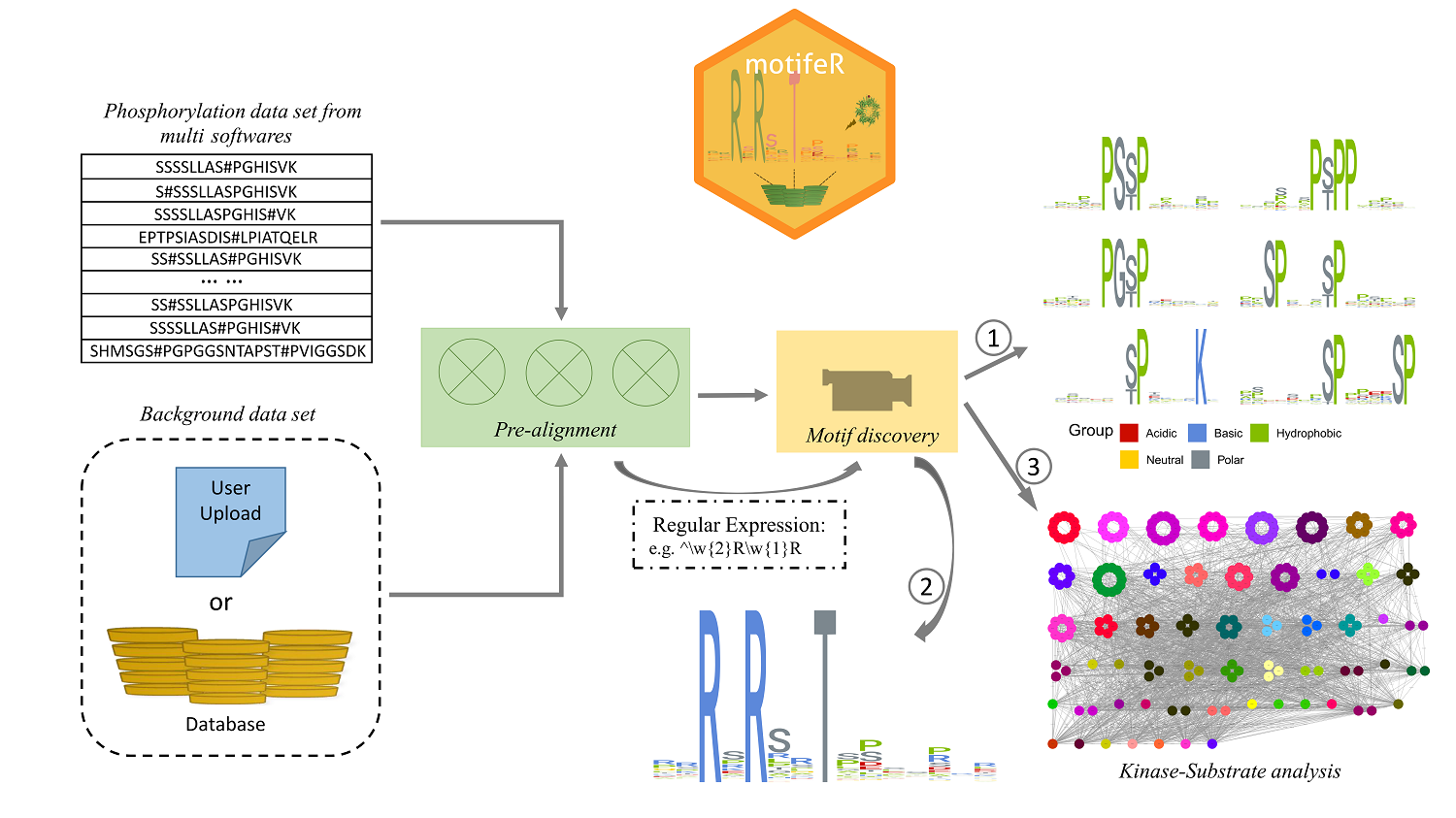
MotifeR may be what I’ve been hoping this motif stuff would do!

There is a cool online web portal (looks like a Shiny interface) and a full package for you smart people who don’t want limits on what you can do.

The authors point out some advantages of their tool over other ones out there. One is kinda funny, because it’s like “well….the server for this competitor went down in January and we checked back periodically over the last 6 months and…yeah…still down….”(I get it, maintaining online resources is hard! 

Other advantages? Directly links to UniProt FASTA for seamless downloads!

Has a walkthrough for loading your data from various output with both MaxQuant and SpectroNaut described!

And the vector plots definitely make it seem more powerful than funny sized and colored letters! Yo, it’s definitely worth a shot, right?

Mensagens revelam falsidade da colombiana do Fantástico

Não se passaram nem três dias em que foi ao ar a ‘matéria’ do Fantástico sobre os Arautos do Evangelho, e já começa a desmoronar uma das principais acusações que o programa apresentou.

As deturpações do grupo organizado que ataca os Arautos poderiam ter ficado restritas ao Ministério Público e tribunais, mas eles preferiram se adiantar a qualquer veredito, espalhando suas versões fantasiosas na mídia – a Globo está ainda replicando exaustivamente o material do Fantástico em seus canais regionais.

Então, diante da amplitude da situação, sentimos na obrigação de expor algo intrigante que conseguimos com algumas irmãs do setor feminino dos Arautos (e pensar que os ‘jornalistas’ David Ágape e Julio Ferreira ‘Ferrari’ nos esnobaram quando nos dispusemos a esclarecer entrevistas…).

A questão é: tudo indica ter caído por terra o relato da colombiana Maria Paula Pinto, que foi à revista Veja e ao Fantástico acusar os Arautos e Monsenhor João Clá de abusos.

Ela talvez mereça o título de ‘fantástica’ – afinal, segundo o Dicionário Aurélio, o adjetivo fantástico possui três acepções: 1. só existente na fantasia, imaginário; 2. extraordinário; 3. falso. Todas as três se aplicam a essa pessoa.

De um tempo para cá, algumas irmãs dos Arautos começaram a nos contactar para dar a conhecer um pouco do currículo das ‘fantásticas’ ex-integrantes que agora as caluniam.

É realmente uma pena que nem Metrópoles, nem IstoÉ, nem a Veja e nem o Fantástico tenham se importado em fazer uma investigação séria, pois, se o tivessem feito, poderiam ter tido acesso a esse material e muitos outros

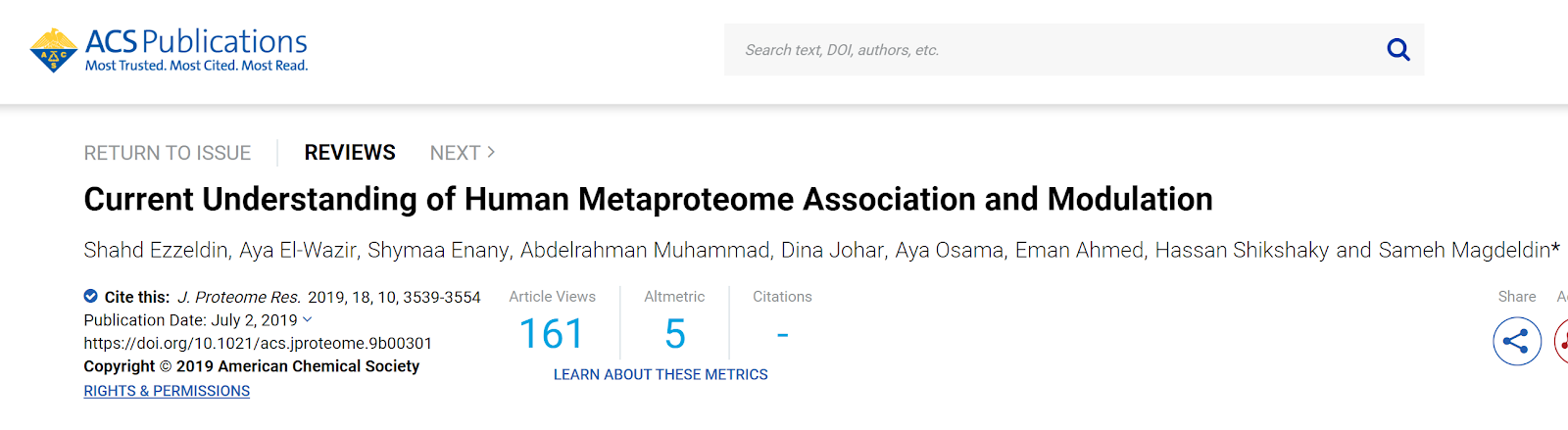
Current understanding (and challenges) in Human Metaproteomics!

What’s all this talk of metaproteomics anyway?

How does it play in with “microbiome” buzzword everyone keeps rambling about all over the place?

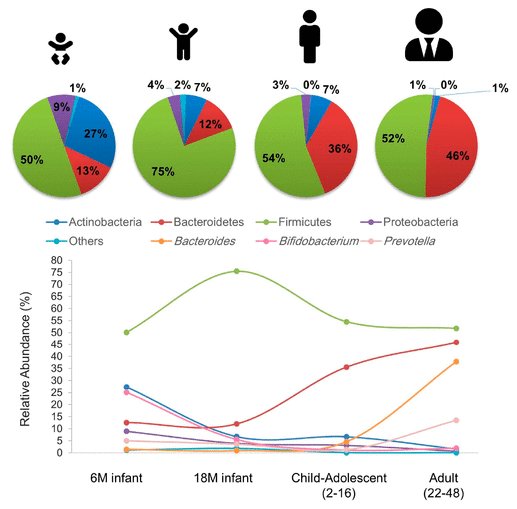
This may be the ultimate guide to where we are right now in applying proteomics (and genomic) technologies to understanding the micobial community (microbiome) in the human body.

We might be, by mass, mostly one organism but we’re vastly outnumbered by the organisms that cohabitate our space with us. (I attended a talk a few years ago, and I wish I knew who gave it, but the speaker told us to think of ourselves as just the vehicle that the microbes use to get around and multiply — which I don’t suggest, because it’s gross….)

I like this guide because it shows the places where the nucleotide based technologies are ahead of the protein based ones and it is quick to point out both the powers and the challenges that we have ahead in really figuring out the microbiome and using it to improve human health, which might be my new record for longest sentence I’ve ever typed, particularly once you take this segway into account…now…..BOOM! new record for sure!

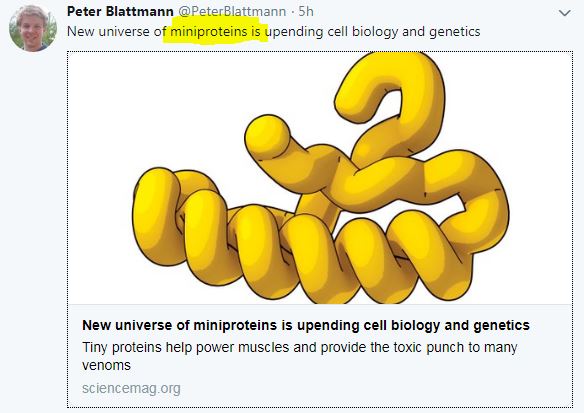
New Universe of miniPROTEINS is upending cell biology!

If you haven’t seen this new editorial in Science, you should 100% check it out.

MINIProteins? You mean the ones that all of us could do and feel like experts in TOP DOWN PROTEOMICS?!?!  Sign me up!

50 amino acids? That’s 5-6kDa.

1) That’ll separate nicely on C-18
2) I probably just have to run it through a MW cutoff filter!
3) I’ll easily get baseline resolution of the MS1 at probably even 60,000 resolution?
4) 30,000 resolution would probably be all you’d need to get charge states and deconvolute the fragments? No microscans, no stepped collision energies? Realistic cycle times could explore this new mini universe of important little proteins!

If you do go after these things using digestion and shotgun proteomics, please take a look at how your software is doing “protein grouping”. In the newer versions of Proteome Discoverer, for example, the larger protein sequence gets the top billing in the group when evidence is even. (For you PD 1.4 holdouts out there, it’s the opposite for you). Another reason we should be doing more top down — and Science says there is some low hanging mini-fruit out there!

Mandatory according to blog rules:

Design a site like this with WordPress.com
Get started