Campanha de doação de sangue ocorrerá no HRSC

O Hospital Regional do Sertão Central, localizado em Quixeramobim, convida a população para um gestor de amor e carinho: doar sangue para quem precisa. Nesta quarta-feira (27) o hospital realiza mais uma campanha de doação de sangue. A coleta será realizada das 7h30 até às 15h00. Doadores voluntários de medula óssea também poderão realizar cadastro no dia da campanha.

Cada bolsa de sangue coletada tem em média 450 ml e é fracionada para extrair três componentes: hemácias, plasma e plaquetas. Sendo assim, uma doação pode salvar até quatro vidas.

Condições básicas para doar sangue:
• Estar saudável.
• Apresentar documento oficial com foto (original ou autenticado).
• Pesar acima de 50kg.
• Estar bem alimentado (evitar alimentos gordurosos 3h antes da doação).
• Ter entre 16 e 69 anos, desde que a primeira doação tenha sido feita até 60 anos.

Os candidatos à doação de sangue com idade entre 16 e 17 anos devem apresentar o Termo de Consentimento formal assinado pelo responsável legal, disponível em http://www.hemoce.ce.gov.br.

Intervalo para doação de sangue
– Homens podem doar sangue a cada 2 meses, até 4 vezes por ano;
– Mulheres podem doar sangue a cada 3 meses, até 3 vezes por ano.

Serviço
Campanha de Doação de Sangue
Data: 27 de novembro de 2019 (quarta-feira)
Horário: das 7h30 às 15h00
Local: Hospital Regional do Sertão Central (HRSC), em Quixeramobim-CE
Informações: (88)3406-1300

Com Ascom / Foto: Ilustrativa

A cada 10 doadores no Ceará, 7 fazem doação múltipla de órgãos, diz associação de transplantes

No Ceará, 845 pessoas doaram órgãos entre os anos de 2015 e 2018. Desse total, 603 tiveram vários órgãos transplantados a pacientes. O que equivale a 71,36% do total de doadores. Em 2019, de janeiro a setembro, foram registrados 116 doadores de múltiplos órgãos. Os dados são da Associação Brasileira de Transplantes de Órgãos (ABTO).

A coordenadora da Central de Transplantes do Ceará, Eliana Barbosa, explica que os números poderiam ser ainda maiores, mas que a doação múltipla no Brasil tem critério restrito. “A retirada de órgãos aqui só pode ser realizada quando há o diagnóstico de morte encefálica. Em alguns países desenvolvidos, como Espanha e Estados Unidos, eles tiram órgãos de doadores em parada cardíaca. Aqui no Brasil, se o coração para e tudo é mantido artificialmente, mas não há morte encefálica, perdemos os órgãos”.

De acordo com Eliana Barbosa, a capacidade de contribuição de um paciente vítima de morte cerebral para salvar ou melhorar outras vidas pode ser ainda maior, mas requer estrutura. “Para retirada de alguns tecidos, precisamos de um banco de multitecidos. No Ceará, temos de córnea e de cordão umbilical – este queremos transformar em um de multitecidos, mas ainda é um projeto incipiente, está em discussão”, relata.

Uma só pessoa com morte encefálica – e cuja doação dos órgãos e tecidos é autorizada pela família – é capaz de beneficiar até 60 outras vivas, explica Eliana. “Órgãos para doar são dois rins, dois pulmões, um fígado, o pâncreas, o coração e o intestino. Mas quando entram tecidos, como válvulas cardíacas, pele, ossos e córneas, pode beneficiar um leque bem maior de receptores”, afirma.

Solidariedade
A professora aposentada Marilena Menezes, 53 anos, passou pela experiência de autorizar a doação múltipla de órgãos do marido Carlos Alberto da Silva, vítima de acidente de trânsito. Com morte cerebral atestada, foi possível doar seis órgãos a pacientes que necessitavam de transplantes.

“O pessoal do hospital me chamou e, naquele momento, eu disse que não permitia. Depois, liguei pra mãe dele e ela disse que poderia doar, porque, desse jeito, ele poderia ajudar tantas pessoas que estavam esperando na fila, e ela teria essa lembrança”, relembra

Foram doados, o coração, as córneas, os rins e o fígado de Carlos Alberto. Com isso, pelo menos, cinco pessoas ganharam uma nova oportunidade de viver. “Insisti pra descobrir quem eles eram e reuni todos na missa de um mês de morte.”

A conscientização dos familiares no momento de perda, segundo coordenadora da Central de Transplantes do Ceará, Eliana Barbosa, é um dos principais desafios para aumentar as doações de órgãos no Estado. “Uma vez que a família é bem acolhida durante o internamento do ente querido e que os profissionais fizeram uma comunicação adequada, isso facilita, as famílias doam”, ressalta.

A solidariedade e as doações múltiplas contribuem para ampliar, ano a ano, uma estatística importante para a saúde no Estado: em 2009, foram concretizados 760 procedimentos no Ceará, número que avançou gradualmente até 2016, quando houve um pico de transplantes e foram realizadas 1.874 cirurgias deste tipo.

Em 2019, somente até 22 de novembro, de acordo com a Secretaria Estadual da Saúde (Sesa), já foram realizados 1.369 transplantes, sendo 805 de tecido ocular (786 de córnea e 19 de esclera), 240 de rim, 191 de fígado, 106 de medula óssea, 21 de coração, três de rim e pâncreas e mais três de pulmão.

Doações por ano

2015
Doadores efetivos: 208
Doadores múltiplos: 169

2016
Doadores efetivos: 222
Doadores múltiplos: 139

2017
Doadores efetivos: 209
Doadores múltiplos: 143

2018
Doadores efetivos: 206
Doadores múltiplos: 152

(Do G1 Ceará)

Velório do corpo de Gugu Liberato será aberto ao público, na Alesp

O velório do apresentador Gugu Liberato ocorrerá na Assembleia Legislativa de São Paulo (Alesp) e será aberto ao público. Ele morreu na última sexta-feira (22), vítima de um acidente doméstico que aconteceu na quarta-feira (20), nos Estados Unidos. A data ainda não está confirmada, mas a previsão é de que o corpo do apresentador chegue ao Brasil na próxima quinta-feira (28). Ele será sepultado no jazigo da família no Cemitério Getsêmani, no Morumbi, também na capital paulista.

A assessoria de imprensa de Gugu Liberato informou que o corpo dele foi liberado hoje (25) pelo instituto responsável por necrópsias e laudos (equivalente ao IML, no Brasil). O próximo passo é a retirada do corpo pela funerária, que vai prepará-lo para o traslado aéreo.

Doação de órgãos
A família decidiu doar todos os órgãos. Na madrugada de ontem (24) foi realizada uma cirurgia para a retirada dos órgãos, que durou mais de seis horas. Cerca de 50 pessoas deverão ser beneficiadas pela doação. 

Gugu sofreu uma queda acidental de uma altura de cerca de quatro metros, quando fazia um reparo no ar condicionado instalado no sótão de sua casa. Ele tinha 60 anos e deixa três filhos: João Augusto, de 18 anos, e as gêmeas Marina e Sophia, de 15 anos. (Da Agência Brasil)

The Okinawa Analytical Instrument Network Meeting 2019!

Have you ever heard of OIST? I’ll be honest, neither had I. I am, however, 100% confident that you will hear lots about it soon. OIST stands for the Okinawa Institute of Science and Technology and it might be the most beautiful campus on earth. No picture I’ve taken has done it justice at all. The facility is built on mountaintops to responsibly protect the ecosystems around it. And it is growing! 

I was inexplicably invited to talk at the Analytical Instrument Network Meeting this year along with some serious mass spectrometry experts. I’m going to ramble through an overview of this meeting here:

Day 1: Meet people, see the amazing facility and Q/A session.

This facility has an amazing array of instrumentation and hardware. From robotics through NMR and various arrays of GCMS and LCMS to support the needs of a facility dedicated to primary scientific discovery. The work they are doing is on a lot of organisms I’ve never even heard of. The best part of day #1, however, was the Q/A session. The speakers (who I’ll detail below by talk on Day #2) and I were invited to sit down with the Instrument Analysis Section Staff (the people running the 40 analytical instruments!) and their collaborators who are utilizing the mass spectrometers the most.

This is a plea from the very bottom of my heart to everyone with an aging mass spectrometer: Please please do not retire that 10 year old Orbitrap. Don’t trade it in for a $15,000 credit unless you really truly can’t afford it with your new instrument. Do this instead: Set that instrument aside and let the power users of your facility — or better yet — students at your or nearby university’s use it. Have a workshop and show people how to do the basic stuff, set it up with some nice generic workflow and let them go. It might be the best investment you’ve EVER made in the future.

OIST has done something similar. They have several LTQ Orbitraps and one is user walk-up. I know your objections. “The students will just break it!” Sure. Set it up so it’s hard to. Capillary flow or, heck, analytical flow. Put a good desalting/trap system on it. Use a wider bore emitter. Give them enough training that they will mess it up some. The payout is astronomical.

I mean no offense to any biologists I’ve worked with in the past, present, or future but if your collaborator’s best understanding of what happens after they give you the sample is something akin to this…..

…you are handicapping yourself, them, and science in general.

They aren’t going to ask the right questions of you or the technology. They are going to ask questions that LCMS is not the right solution for and the project will be a failure. Or they are going to ask questions that the technology could easily answer without knowing that while doing so they could learn much much more. (And how much longer are they going to even be interested in what we do?) Without some fundamental understanding of what we’re doing in the lab (and to be fair, I do a decent amount of dancing in the lab when no one is around, and I KNOW I’m not the only one — what else do you do when you’re sonicating or centrifuging for 3 minutes?) we aren’t speaking the same language. OIST previously had an ion trap that some users were trained to utilize and now they have an Orbitrap Classic. And you know what?

The questions the panelists and I received were some of the best I’ve EVER heard from a group of people consistently. I’m not kidding — the biologists who are using the center resources know enough about what the instrument is doing that they are pushing the boundaries of what I or the other panelists (and I think we were talking about 75 years of mass spec experience on the panel, all told) knew or had thought about. I frantically started taking notes, because there were things the biologists cared about that we could absolutely be helping them with, that we aren’t because we aren’t thinking in the same terms. (Now, it probably doesn’t hurt that the proteomics lead here, Alejandro Villar, might be a legitimate genius, but the end users here are impressive. And, yeah, there is probably an abundance of talent, but my bet is that most facility’s could come close to replicate this model with similar success.)

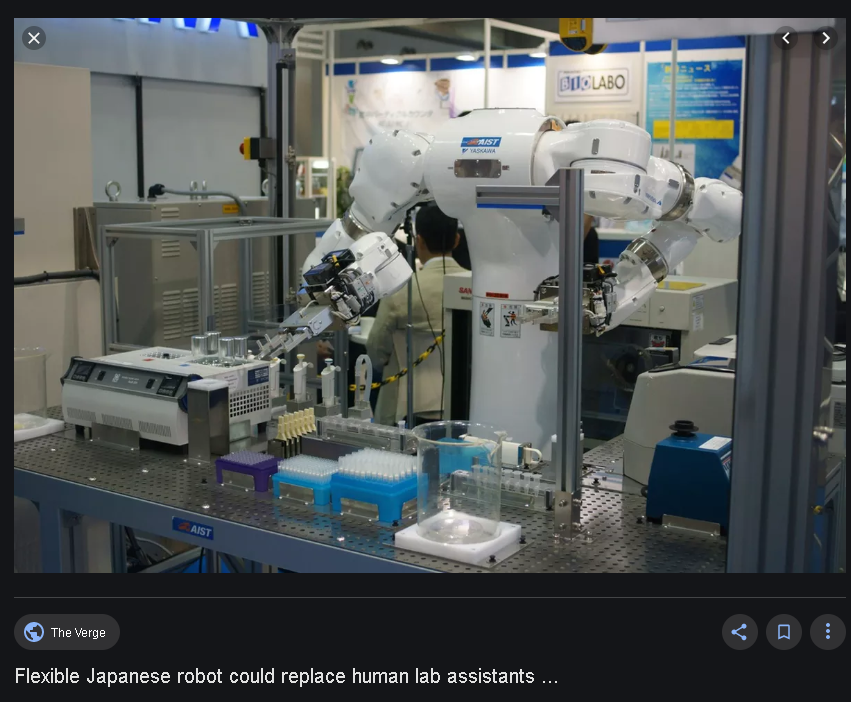
As an aside — this group does have what might be the solution for the hardest part of single cell analysis. They have a slow, methodical robot that is designed 100% toward reproducibility and accurate sample handling. It might cost more than an Eclipse, but how many single cell proteomes do you have to mess up before that seems negligible? Depends on the model, I’d guess!

Day 2: The actual meeting.

Our host Dr. Kazuo Yamauchi kicked off the workshop by reminding everyone that this was an interactive event (yeah! that’s how you learn this stuff, unless you’re a giant sample prep robot..)

Highlights?

Dr. Andreas Huhmer provided a remarkable optimization of single cell proteomics by his team beginning with label free analysis (<500 proteins) to ScoPE-MS (~1,000 proteins) through adding FAIMS and then Direct Search (the Eclipse function that presearchest TMT data to make sure it's decent before doing SPS MS3.

Huge takeaway here (and he’s sent me a reference) if you are doing ScoPE-MS you do not want to overload your carrier channel!! It seems like you could just load more and more peptides into your carrier and you will get more data. You will get more peptide IDs — sure — but you will screw up your reporter ion signals. You’ll suppress the single cells. To be honest — I was sure I was ruining my sample prep when did ScoPE-MS (and I probably didn’t do it any favors) but I did think that loading more carrier was a great next step when the first experiment didn’t look great — and — I think my data looks like what he was describing. More on this later, for sure.

Professor Yet-Ran Chen — studies of plant immunology leading to a massive success story toward leveraging plant immune function to getting the world away from pesticides with endogenous immune peptides. Check out this new paper on the topic. Also — his team has developed a method for using Mascot to search for endogenous peptides. He’s doing this with plant immune peptides — strategies to steal for HLA/MHCs? Probably! (I mean…I was just impressed to learn that plants had immune systems, to be honest)

Professor Newman Siu Kwan — His group does a lot of work with proteomics and PTMs and aging, and that is what he spoke about. His Google Scholar indicates that a lot of stuff deals with…compounds that mediate…age related terribleness. 100% worth searching through this!

Professor Takeshi Bamba — Metabolomics by supercritical fluids!  This talk began with me frantically taking notes and looking up what supercritical fluids are. His team uses pressurezed CO2 to separate metabolites! You can separate lipid classes with it. And it can be coupled to HPLC and then to mass spec and he’s partnered with vendors to bring this technology to market. I’m still not 100% sure I get it, but it’s worth checking out.

Other highlights were great questions and conversations and the pages of notes that I have.

I’m still not sure how I got included in this, but I’m deeply greatful to the organizers for this experience and have made some friends here that I hope I have for life. I even got to stick around and sit in front of their instruments and learn and bounce ideas back and forth with this amazing team.

OIST has a dream of doing something truly special to improve the environment and science of the world and they are well on their way to accomplishing it on this ridiculously beautiful and fun little island!

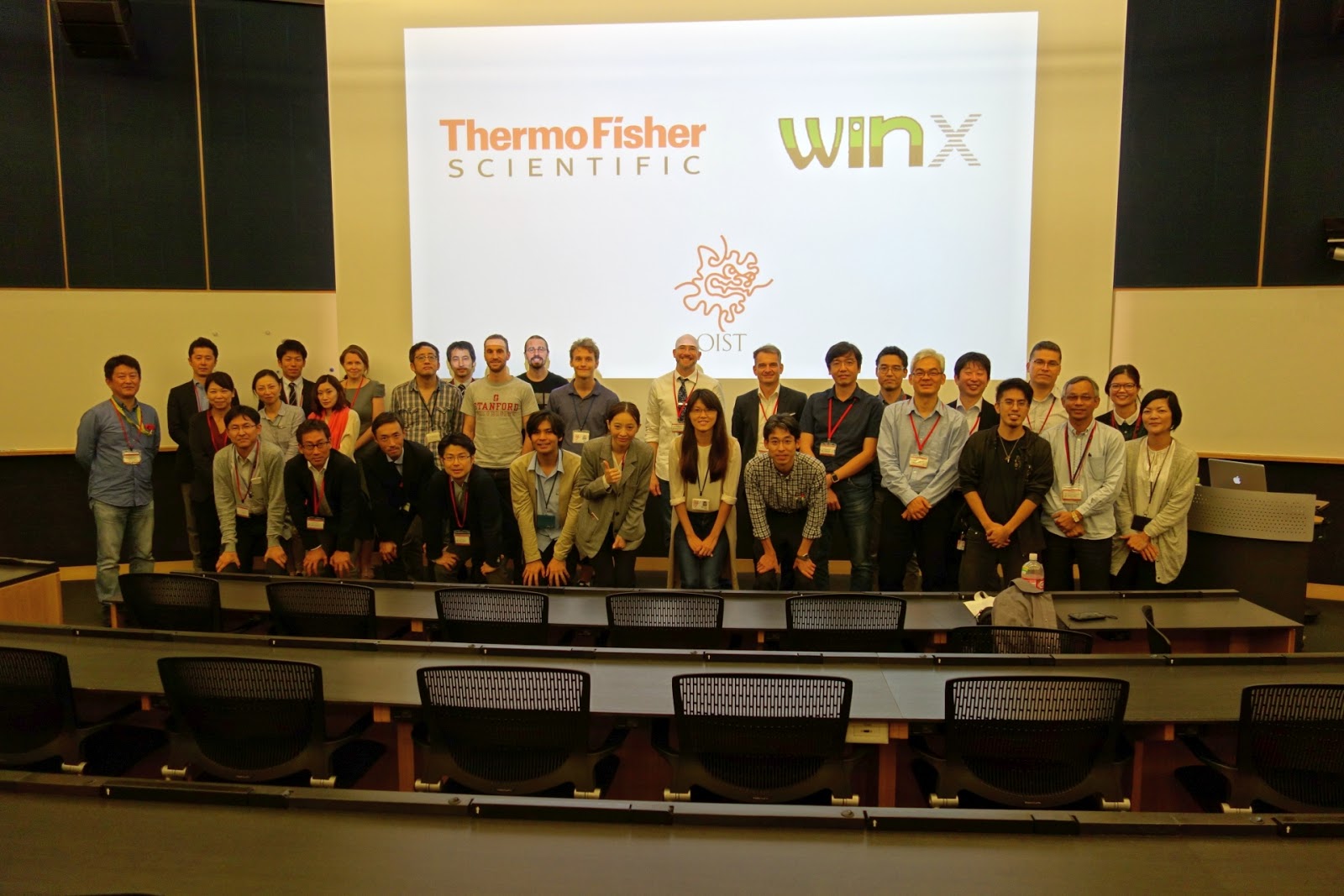
Edit: Right as I was boarding the next leg of my 20+ hour trip home I received the picture at the top from Dr. Yamauchi. I made the joke repeatedly that all you would see was the projector bouncing light off my shiny head. I am waiting for my first of many planes today to board and I can’t stop laughing because I was more right than I knew. A consequence of the great aerodynamics I get these days!

Gás de cozinha fica 4% mais caro a partir desta segunda-feira, 25

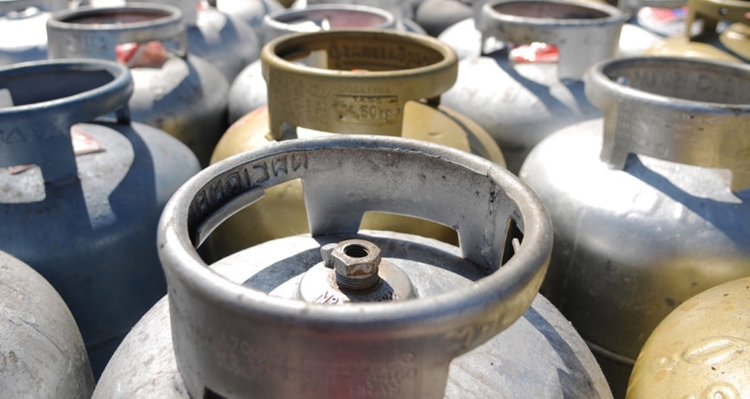
O gás de cozinha passa a ficar 4% mais caro a partir desta segunda-feira, 25, no novo reajuste executado pela Petrobras para botijões de 13 quilos. Este é o segundo aumento seguido do preço do produto em um mês, já que, em outubro, a estatal havia anunciado alta de 5%.

A venda em grande botijões ou a granel também sofrerá aumento de preço, em 0,6%, em média. Ao todo, o preço de venda nas refinarias da Petrobras representa cerca de 40% do preço final do botijão, sendo, o restante, correspondente aos impostos e à margem de lucro.

Com todos os ajustes neste ano, considerando os quatro aumentos e a queda de 8,2%, o combustível está com alta acumulada de 4,8%.

Os repasses para o consumir dependem da política comercial de distribuidoras e revendedores.

Do Repórter Ceará

Aposentados recebem segunda parcela do INSS a partir de hoje

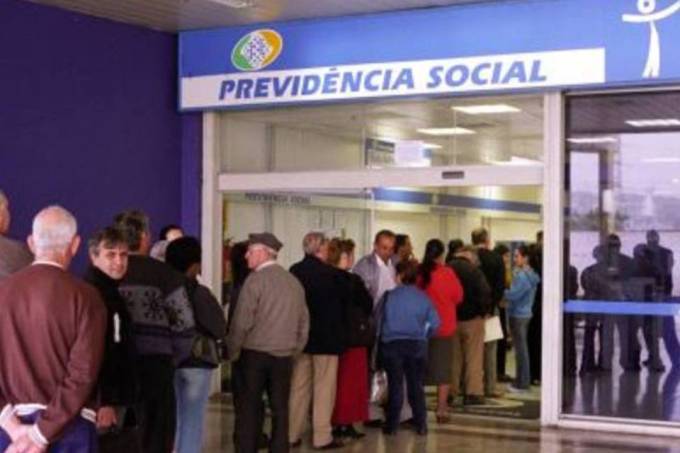
A partir desta segunda-feira (25), aposentados e pensionistas recebem a segunda parcela do 13º salário. O Instituto Nacional do Seguro Social (INSS) fará o depósito até dia 6 de dezembro, na folha de pagamento mensal.

Os primeiros a receberem o pagamento serão os que recebem até um salário mínimo (até R$ 998) e possuem cartão com final 1, sem considerar o dígito. Quem ganha acima de um salário mínimo começa a receber a partir do dia 3 de dezembro. (Da Revista Exame)

Congresso tenta aumentar para R$ 4 bilhões verba para candidatos

O Congresso Nacional se articula para derrubar vetos do presidente Jair Bolsonaro à chamada minirreforma eleitoral em sessão conjunta de deputados e senadores marcada para esta terça-feira (26). O principal objetivo dos parlamentares, sobretudo do Centrão, é liberar o aumento do fundo eleitoral, destinado às campanhas municipais de 2020, conforme critérios definidos por eles mesmos. Dirigentes partidários se movimentam para que o valor autorizado ano que vem seja de R$ 4 bilhões, R$ 1,5 bilhão a mais do que o governo havia proposto inicialmente.

Na conta também está incluída a retomada da propaganda partidária na TV e no rádio, aquela exibida inclusive em anos não eleitorais. De acordo com o Ministério da Economia, a medida tem impacto orçamentário de R$ 400 milhões com a compensação fiscal dada às emissoras. Quando extinguiram a propaganda partidária, em 2017, os partidos alegaram que o recurso seria usado no fundo eleitoral. (Do Congresso em Foco)

Brasil registra queda de 22% nas mortes violentas em 9 meses, revela índice nacional de homicídios

O Brasil teve uma queda de 22% no número de mortes violentas registradas nos nove primeiros meses deste ano em comparação com o mesmo período de 2018. É o que mostra o índice nacional de homicídios criado pelo G1, com base nos dados oficiais dos 26 estados e do Distrito Federal.

Somente em setembro, houve 3,3 mil assassinatos, contra 4,1 mil no mesmo mês do ano passado. Já no período que engloba os nove meses, foram 30.864 mortes violentas — 8.663 a menos que o registrado de janeiro a setembro de 2018 (39.527).

A tendência de queda nos homicídios do país tem sido mostrada pelo G1 desde o balanço de 2018 – a maior queda dos últimos 11 anos da série histórica do Fórum Brasileiro de Segurança Pública, com 13%. Já no 1º semestre deste ano, a queda foi de 22% – percentual que se mantém. (Do G1-CE)

A Wrap-Up for the TARP

“In October 2008, the Emergency Economic Stabilization Act of 2008 (Division A of Public Law 110-343) established the Troubled Asset Relief Program (TARP) to enable the Department of the Treasury to promote stability in financial markets through the purchase and guarantee of `troubled assets.’� The Congressional Budget Office offers a retrospective on how the controversial program all turned out in “Report on the Troubled Asset Relief Program�April 2019.

One issue (although certainly not the only one) is whether the bailout was mostly a matter of loans or asset purchases that were later repaid. A bailout that was later repaid might still be offensive on various ground, but at least it would seem preferable to a bailout that was not repaid.

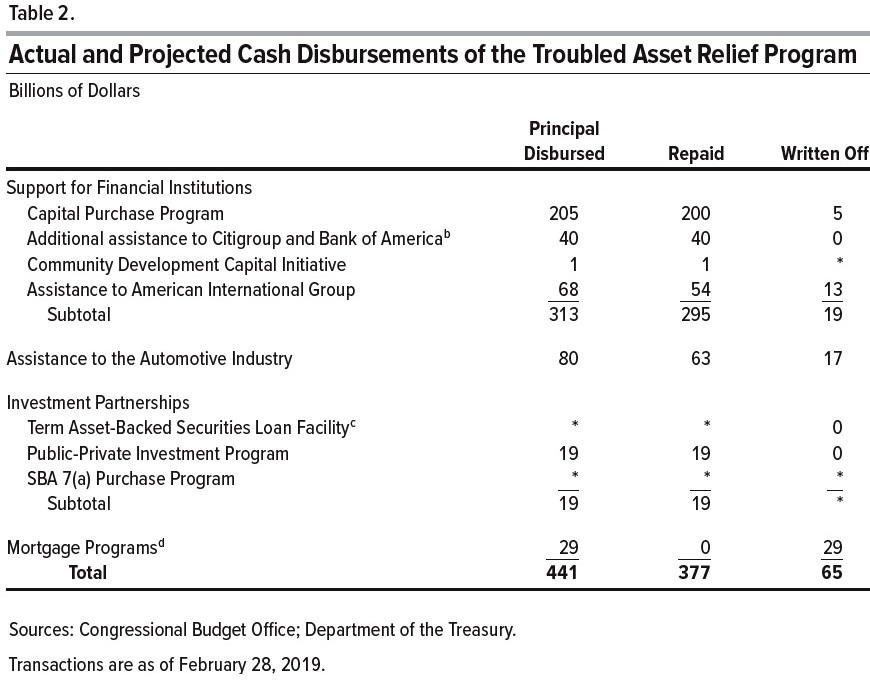
As a reminder, TARP authorized the purchase of $700 billion in “troubled assets.” The program ended up spending $441 billion. Of that amount, $377 billion was repaid, $65 billion has been written off so far, and the remaining $2 billion seems likely to be written off in the future. Here’s the breakdown:

Interestingly, the biggest single area of TARP write-offs was not the corporate bailouts, but the $29 billion for “Mortgage Programs.” The CBO writes: “The Treasury initially committed a total of $50 billion in TARP funds for programs to help homeowners avoid foreclosure. Subsequent legislation reduced that amount, and CBO anticipates that $31 billion will ultimately be disbursed. About $10 billion of that total was designated for grants to certain state housing finance agencies and for programs of the Federal Housing Administration. Through February 28, 2019, total disbursements of
TARP funds for all mortgage programs were roughly $29 billion. Because most of those funds were in the form of direct grants that do not require repayment, the government�s cost is generally equal to the full amount disbursed.”

The second-largest category of write-offs is the $17 billion for the GM and Chrysler. Here’s my early take on “The GM and Chrysler Bailouts” (May 7, 2012). For a look at the deal from the perspective of two economists working for the Obama administration at the time, see Austan D. Goolsbee and Alan B. Krueger,” A Retrospective Look at Rescuing and Restructuring General Motors and Chrysler,” in the Spring 2015 issue of the Journal of Economic Perspectives.

Not far behind is the bailout for the insurance company AIG. It lost $50 billion making large investments and selling insurance on financial assets base on the belief that the price of real estate would not fall. The US Treasury writes: “At the time, AIG was the largest provider of conventional insurance in the world. Millions depended on it for their life savings and it had a huge presence in many critical financial markets, including municipal bonds.” A few years back, I wrote about  “Revisiting the AIG Bailout” (June 18, 2015), based in substantial part on “AIG in Hindsight,” by Robert McDonald and Anna Paulson in the Spring 2015 issue of the Journal of Economic Perspectives.

Finally, the Capital Purchase Program involved buying stock in about 700 different financial institutions. Almost all of that stock has now been resold (about $20 million remains), and the government ended up writing off $5 billion overall.

Of these programs, I’m probably most skeptical about the auto bailouts, but even there, the risk of disruption from a disorderly bankruptcy, spreading from the companies to their suppliers to the surrounding communities, was disturbingly high. The purchases of stock in financial institutions, which may have been the most controversial step at the time, also came the closest to being repaid in full.

In the end, one’s beliefs about whether TARP was a good idea depend on one’s view of the US economy in October 2008. My own sense is that the US economy was in extraordinary danger during that month. B all means, let’s figure out ways to improve the financial system so that future meltdowns are less likely, and I’ve argued “Why US Financial Regulators are Unprepared for the Next Financial Crisis” (February 11, 2019). But when someone is in the middle of having a heart attack, it’s time for emergency action rather than a lecture on diet and exercise. And when an economy is in the middle of a severe and widespread financial meltdown, which had a real risk of turning out even worse than what actually happened, the government needs to accept that however its regulators failed in the past and need to reform in the future, emergency actions including bailouts may need to be used. I do sometimes wonder if the TARP controversy would have been lessened if more individuals had been held accountable for their actions (or sometimes lack of action) in the lead-up to the crisis. 

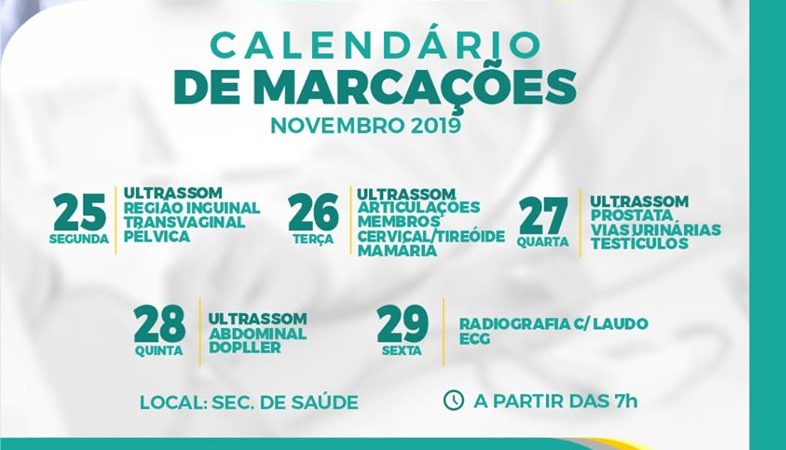
Divulgado o calendário de marcação de exames e consultas da Secretaria de Saúde

A Secretaria de Saúde de Quixeramobim divulgou o calendário desta semana do agendamento de consultas e exames especializados.

O setor passa a receber as solicitações, a partir das 7 horas. Os pedidos, conforme já lembrou a pasta, são recebidos durante o horário de expediente e repassados aos profissionais médicos que avaliam e delimitam conforme grau de gravidade do paciente.

O novo sistema foi adotado para evitar que pessoas dormissem em filas, saindo da ordem de chegada, para a ordem de prioridade.

Informações: 088 3441.1112

Design a site like this with WordPress.com
Get started