Synapse proteomics (and phosphoproteomics) and sleep cycle!

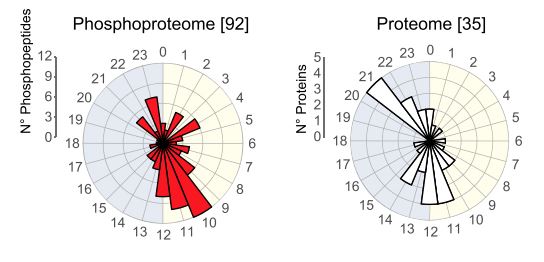
…and the winner for some of the prettiest and most useful plots I’ve seen this year goes to two recent (new?) studies in Science about proteomics of mouse synapses and sleep.
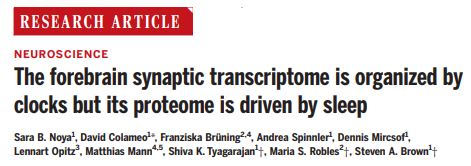

(One and two)

I stared at the very top for several minutes in the afternoon when my brain is generally working at it’s typical extremely limited capacity before I realized it’s changing signals over clocks!

Here is my summary:

1) Sleep is super important at a proteome — and particularly a phosphoproteome level (there are really cool analyses of neuropeptide signaling events here as well. (Scary for people with intense insomnia? Maybe?)

2) This may be completely untied from the transcriptomic regulation which is totally circadian-ish. (This is kinda big, right?) I’m always ranting about how low the correlation is between transcript abundance and protein abundance and here is a CRITICAL system where the two appear completely untied from a regulatory standpoint!! Killer paper

3) When you’re starting out with a tiny amount of material (I’m doing synapse work right now and, we’ll of course, model it after this paper) and you have to do phosphoproteomics on it — that’s when you call in Cox Lab for help.

4) One thing that stands out a little here from how we go about it is that we start with distinct brain subsections that are surgically removed and then the synapses are enriched from, for example, the hippocampus first and the pre-frontal cortex, because from the RNA-Seq stuff we’re very concerned about mudding signals. Here they appear to have started with a big section of the brain and concentrated the synapses from them at once. Considering our maximum extraction from the hippocampus synpases is like ~1ug…maybe…this is likely critical to get phosphopeptides.

5) We’re completely stealing the layout of this paper for our synapse studies. 100% just copying how this is laid out and putting our data in it. Worked for them. Two (2!!) science papers?  Totally deserved because this work is killer.

6) Many people will still read this and then try to do transcriptomics of the brain, look up what proteins those transcripts make and will call it “quantitative proteomics” because…well….

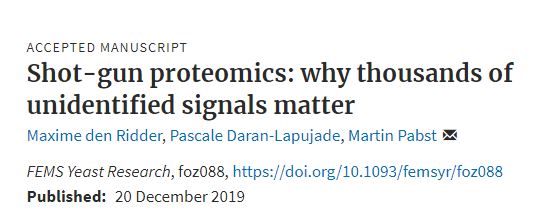
Why hundreds of thousands (millions) of unidentified MS signals matter!

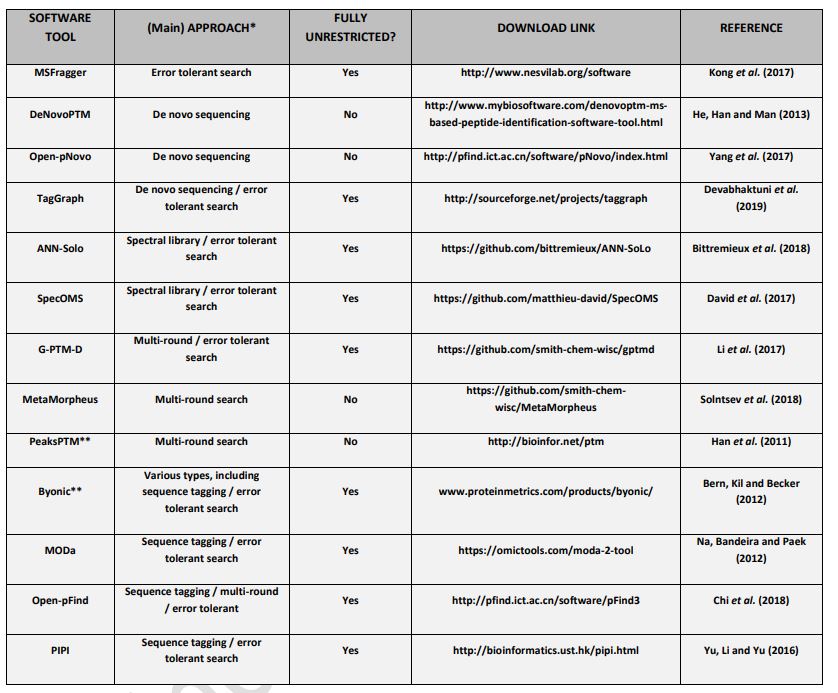
The table above is a great breakdown of what I’m going to call “nextgen proteomics search engines” going forward.

SeQuest (and, yes, reviewer number 3, I’m going to continue to capitalize it this way for the rest of time. Typing it in all caps makes it seem like I’m screaming about how much I miss the 90s {which… admittedly…I do sometimes…} is just missing too many things. I don’t first pass anything with it anymore. I first pass with MetaMorpheus, find my PTMs and then MSAmanda them (because I like the PD output and MS2Go. Unless…well…it’s a complicated PTM and then I just MetaMorpheus and stop. Cause there are modifications that MM will find that are 100% real that nothing else will find. One of the coolest things is when a PTM changes the charge state of the peptide. Like so you add the mod and you lose a proton. And it adjusts for that mass/charge shift.

I’m lumping SeQuest with Sanger Sequencing going forward. As in, whatever was before “next gen”.

And this cool new review provides loads of extra reasons for why!

Why is it Shot-Gun? I dunno. I do like that this is a great review of open searching algorithms and why they are so very critical for us as a field, and for biologists who are thinking about proteomics stuff.

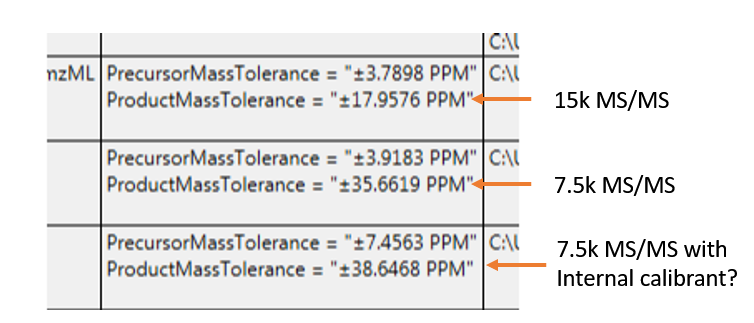
Exploris mass accuracy at highest speeds? Or is the data being read funny?

I’m skeptical of these results, but I still think they’re worth mentioning.

This is an Exploris data dependent experiment. 80ng of commercial HeLa digest on a 60 minute gradient with different resolutions. 120k MS1 and two separate runs (n = 1, look ma’ I’m a scientist…)

The 18ppm MS/MS fragment tolerance lines up with what I’ve seen with various tools for the HF and HF-X. The higher speed…..that’s a bit larger of a difference.

The weird part is the fact that in the third run (and I just checked to make sure I wasn’t being stupid) I used the internal calibrant (fluoranthene gnarly? radical?) for the MS1 and MS/MS.

Obviously, n=1, but that’s pretty weird, right?

This output in MetaMorpheus, but a lot of software does that calibration step these days and I’ll check those, but I do have to wonder if there is a scan header thing?

In a couple of tools I’ve had some weird glitches with Exploris data — which was fixed by updating my MSFileReader on various computers. I don’t have any conclusions here. but I do think it’s something worth keeping an eye on!

Also — please keep in mind that post-acquisition calibration is basing an MS/MS fragment on theoretical. At lower resolution we’re seeing more coalescing peaks (they’ve overlapped and we can’t tell them apart) so the error is stuff like that (and mis-assigntments) on top of any drops in mass accuracy.

Remember how the scan headers got swapped around 2012 and old MSFileReaders would sometimes put the pre-MIPs mass in as the monoisotopic mass? That was fun! Not saying that’s what is going on, but it has certainly happened before.

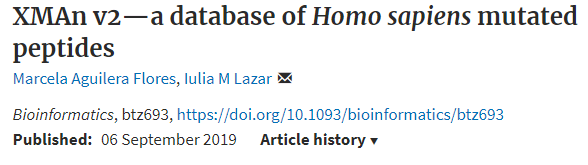
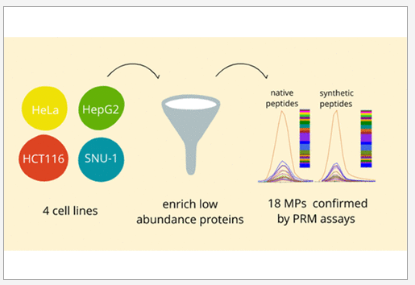
XMAN v2.0 — Even more human cancer mutations — now on Github!

How did I miss this?!? 

We can ALL do proteogenomics if someone is nice enough to

open the door by taking all the “normal variation” and deleterious mutations and put them into nice protein .FASTA databases for us. Then we just do what we’d normally do, maybe mumble something semi-coherent about FDR in the method section of our paper and we’re done.

If you’re in the cancer realm, we’ve had a great tool like this for years now. The XMAN database is a composite of hundreds of thousands of mutations that we can use for searches if we’ve got enough processing power, or we can reduce them and utilize them.

After using it nonstop for years it’s honestly pretty depressing to work with other diseases that don’t have a resource like this.

How do you improve on something this useful? Well…you could start by adding a few million more mutated sequences.

A. FEW. MILLION. MORE.

Oh and you could make the resource a little easier to get to, I guess! And they did that to. You can get it all on Github here!

ProteoMiner utilized to find missing proteins!

“Missing proteins” are the ones that the genetics stuff says are there that we can’t find proteomics evidence for.

Both the really hydrophilic and the really hydrophobic aren’t a lot of fun to work with, particularly if you’re using things like trap columns (or cough cough PepMap). Good-bye hydrophilic peptides!  Unfortunately, those missiing proteins tend to fall into one of those two groups. This great new study at JPR utilizes an commercial enrichment/depletion method from the past called “ProteoMiner” to get to them.

ProteoMiner has been around for a loooooooong time. And it had some solid applications in depleting proteins prior to doing 2D-gels. It’s usefulness in more modern global proteomics has been a little less clear and you don’t hear about it much anymore. The idea is that you make crazy big peptide ligand libraries and then use that as a depletion column. You know the top 10 depletion columns we use for plasma/serum? Imagine that on a much larger scale. Deplete 100 things?

This group uses it to go after the super hydrophobic membrane stuff. They start with a membrane prep then they ProteoMiner it — then they use a combination of crazy HPLC separation methods and — violin — they end up with solid evidence for a bunch of proteins that should be there!

Are you looking for crazy membrane proteins? Maybe this is a cool new/old technique to check out!

Prefeitura entrega Praça da Lagoa Cercada

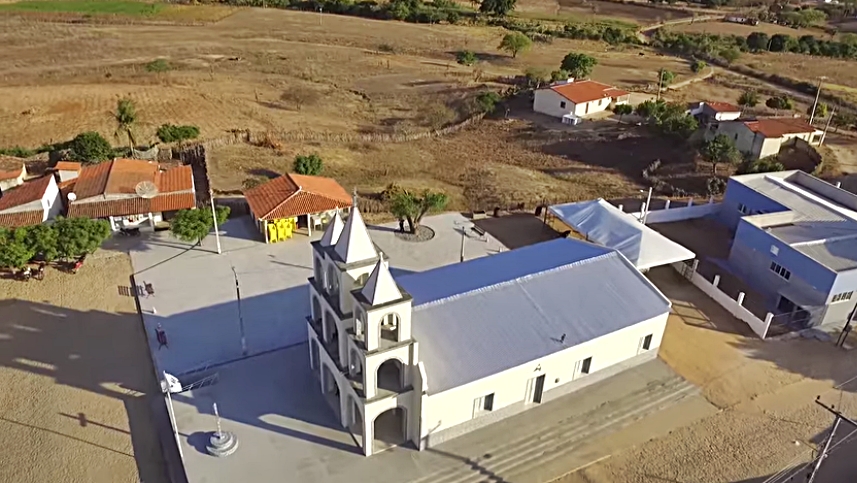
A Prefeitura Municipal de Quixeramobim entregou a população de Lagoa Cercada, na zona rural, mais um equipamento público na noite do último sábado, 07. Trata-se da inauguração da Praça da comunidade.

“Sentimento de dever cumprindo, de que se trabalhando desta forma nós conseguimos levar os benefícios a todas as regiões”, disse o prefeito ao lembrar de outras ações realizadas naquela comunidade: “Aqui já fizemos instalação de poços profundos, com dessalinizadores, em parceria com Exército, já entregamos a Unidade Básica de Saúde, estradas, iluminação e outros benefícios”.

A Assessoria de Comunicação divulgou um vídeo sobre o assunto:

Banco do Nordeste alcança R$ 35 bilhões em aplicações este ano

O Banco do Nordeste alcançou, nos primeiros onze meses de 2019, aplicações globais no montante de R$ 35 bilhões. Desse total, R$ 25 bilhões foram contratados com recursos do Fundo Constitucional de Financiamento do Nordeste (FNE), correspondendo a 519,3 mil operações de crédito que beneficiaram empreendimentos nos 1990 municípios  localizados na área de atuação do BNB, os nove estados do Nordeste e o norte de Minas Gerais e do Espírito Santo.

Infraestrutura (R$ 8,5 bilhões), comércio e serviços (R$ 6,2 bilhões), agricultura (R$ 3,5 bilhões), pecuária (R$ 3,4 bilhões), indústria (R$ 2,3 bilhões), turismo (R$ 448,1 milhões), agroindústria (R$ 368,2 milhões) foram os setores que mais demandaram financiamentos por meio do FNE. Já as micro e pequenas empresas (MPEs) contrataram, no período, 29,7 mil operações, equivalentes a valores de R$ 3,2 bilhões.

Destaque-se que, do volume global aplicado pelo BNB com recursos do FNE, R$ 13,7 bilhões, equivalentes ao total de 387,3 mil operações, beneficiaram o Semiárido da Região, conforme  diretrizes estabelecidas pelo Fundo que visam desenvolver esse território do Nordeste.

Nos primeiros onze meses do ano, o Crediamigo, maior programa de microcrédito urbano da América do Sul, contratou R$ 9,4 bilhões, distribuídos em 4,1 milhões de operações, enquanto o Agroamigo / Programa Nacional de Fortalecimento da Agricultura Familiar (Pronaf) beneficiou 473,5 mil mini e pequenos produtores rurais, que receberam R$ 2,8 bilhões.

Segundo o presidente do BNB, Romildo Carneiro Rolim, “o Banco trabalha intensamente na perspectiva de aplicar os R$ 27,7 bilhões orçados para o FNE, em 2019, esforço que tem sido compartilhado com os empreendedores dos diversos setores e portes da economia regional”.

Aplicações no Ceará

No Ceará, somente em 2019, o Banco do Nordeste já aplicou R$ 4,6 bilhões com recursos do FNE, por meio de 69,1 mil contratos de crédito. O Crediamigo contratou 1,5 milhão de operações, no valor de R$ 3 bilhões, enquanto o Agroamigo/Pronaf desembolsou R$ 369,4 milhões para um total de 60,3 mil operações. (Da Ascom)

‘Uma mulher com minha pele não era considerada bonita e isso acaba hoje’, diz Miss Universo 2019

A sul-africana Zozibini Tunzi chamou atenção do júri da 68ª edição do Miss Universo, composto apenas por mulheres, em seu último discurso antes de ser coroada no final da noite desse domingo, 08, em Atlanta nos Estados Unidos.

Ao ser questionada pelo apresentador Steven Harvey, a relações-públicas disse que gostaria de ver a sua beleza inspirando as novas gerações de meninas. “Eu cresci em um mundo em que uma mulher com a minha pele, a minha aparência e o meu cabelo não era considerada bonita. Isso acaba hoje. Quero que as crianças enxerguem o reflexo dos seus rostos no meu”, disse.

Zozibini Tunzi desbancou outras 89 candidatas e se tornou a Miss Universo 2019. Ela, que tem 26 anos e é ativista, é a primeira negra a ganhar a coroa desde a vitória de Leila Lopes, de Angola, em 2011. Madison Anderson, de Porto Rico, e Sofía Aragón, do México, ficaram em segundo e terceiro lugar respectivamente.

A nova Miss Universo também falou sobre a questão ambiental, na fase de perguntas e respostas. “Acho que os líderes do futuro podem fazer mais, mas acho que nós como indivíduos também podemos fazer mais. Desde a sexta série eu aprendo que o nosso planeta está morrendo. Depende de nós mantermos a nossa segurança. Vemos crianças protestando e nós, adultos, podemos cooperar”, afirmou.

Para conquistar a coroa, Zozibini Tunzi passou por uma seleção preliminar onde desfilou de biquíni, traje típico, traje de gala e traje fashion. No concurso desta noite, ela desfilou novamente de roupa de banho, de roupa de noite e apostou em um vestido de gala totalmente diferente – surpreendendo os jurados.


Miss Brasil fica entre as 20 melhores

Júlia Horta, representante brasileira, passou a seleção preliminar que selecionou as 20 melhores candidatas da noite, mas acabou sendo eliminada no corte para o top 10. Ela apostou um traje típico que homenageou o futebol feminino, em especial a jogadora Marta Silva, e aproveitou o desfile para protestar contra a violência de gênero.

Em seu discurso deste domingo, 8, a jornalista também falou sobre feminismo. “Como Miss Brasil e mulher, eu tenho obrigação de lutar pelos direitos humanos e contra o abuso e a violência contra a mulher. Graças às feministas do passado, hoje eu tenho muitos direitos e eu prometo lutar pelas próximas gerações”, disse.

Do Repórter Ceará – Entretenimento Band (Foto: Frank L Szelwach/Miss Universe Organization)

Quixeramobim: Motorista perde controle de carro e atinge dois postes

Um jovem perdeu o controle de seu veículo Troller XLT, de placas PMN 1009, enquanto trafegava na Avenida Humberto Sena, nas proximidades da Escola Estadual de Educação Profissional Dr. José Alves da Silveira, no bairro Edmilson Correia de Vasconcelos, em Quixeramobim.

Segundo apurado, o caso foi registrado na manhã de hoje, 09, e após perder o controle, o veículo atingiu dois postes do local. O condutor foi socorrido ao Hospital Regional Dr. Pontes Neto e seu estado de saúde é desconhecido.

(Foto: Reprodução/WhatsApp)

Furto de materiais de construção e prisão por tráfico de drogas movimentam o plantão do final de semana

O boletim policial deste último final de semana, em Quixeramobim, apontou a ocorrência de dois casos neste domingo, 08.

Por volta das 11h30min, uma equipe do Raio se desloucou ao Alto da Betânia, após receber informação de que um indivíduo estava traficando. O mesmo foi abordado e com ele encontrado 129 trouxas de cocaína,  um revólver de marca taurus, calibre 38, com capacidade para seis tiros e ainda a quantia de R$ 810,00. O acusado foi conduzido à Delegacia Regional de Polícia Civil, em Quixadá.

O segundo caso, registrado às 13h50min, ocorreu na Rua Francisco Osmar Martins, também no Alto da Colina. Uma ligação anônima informou que um homem estava furtando uma casa em construção. O acusado foi identificado como sendo F. C. R. B.. Com ele a PM encontrou um carrinho de mão, uma enxada e fios de energia.

Uma pessoa se apresentou como testemunha do furto e o caso também foi encaminhado à Delegacia Regional.

Design a site like this with WordPress.com
Get started